The Junkers F 13, the world's first all-metal airliner, is celebrating its centenary in 2019. On this occasion, Junkers Flugzeugwerke AG is organising an anniversary tour with the Junkers F 13. The highlight will be a visit to Dessau, where the history of Junkers Flugzeugwerke once began.
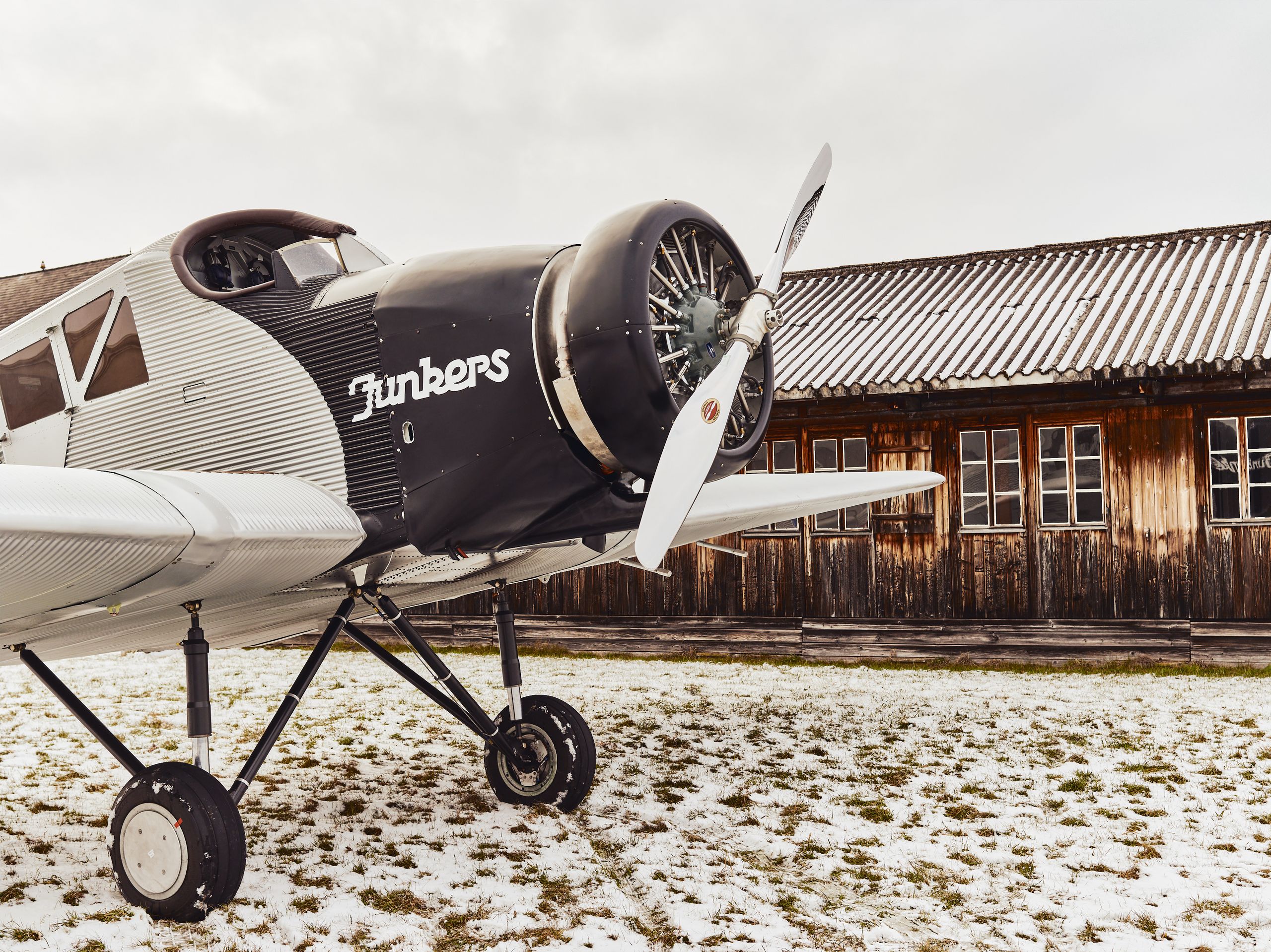
At 20 stations in five European countries, the Junkers F 13, built in 2016 by Junkers Flugzeugwerke in Dübendorf, is intended to commemorate aviation pioneer Hugo Junkers and fuel enthusiasm for historic aviation.
Hugo Junkers (1859 - 1935) was a university teacher, researcher, engineer and entrepreneur. In 1895 he founded Junkers Flugzeugwerk AG in Dessau (Saxony-Anhalt). He carried out fundamental research and development work, which then enabled him and chief designer Otto Reuter to design the Junkers F 13.
With the Junkers F 13, a passenger and cargo aircraft was developed for purely civilian use for the first time. It offered a closed cabin for four passengers and an open two-man cockpit. On June 25, 1919, it had its first flight in Dessau, and on September 13, it set a sensational world altitude record of 6.750 meters. By the beginning of the 1930s, the Junkers F 13 was built around 360 times in various variants.
Duralumin set new standards
The interior was inspired by early passenger cars: The four passengers sat weather-protected and in the comfortably upholstered armchairs of the heated cabin with its large windows. Fresh air was blowing around the pilot and his mechanic's noses in the open pulpit.
Key design features of the Junkers F 13 are still valid today in commercial aircraft construction. Its all-metal construction was considered a revolution, as the aircraft at the time were mostly still made of wood and covered with canvas.
The newly developed duralumin gave the machine strength and weather resistance, making it possible to use it even in subtropical areas. Various water-cooled in-line cylinders from our own design or from Mercedes and BMW were used as drives. Later versions were also offered with air-cooled radial engines.
A Piece of Aviation History Comes Alive Again
The entrepreneur and passionate pilot Dieter Morszeck started his project for the new edition of the Junkers F 13 in 2013. In 2018, he founded Junkers Flugzeugwerke AG in Dübendorf near Zurich.
Since original drawings and building plans were no longer available for all parts of the Junkers F 13, one of the few surviving originals was precisely measured using laser technology. For the replica, long-forgotten construction methods and how to use the corrugated aluminum sheet had to be learned again.
Under the eyes of the Federal Office of Civil Aviation (FOCA), engineers and aircraft manufacturers gradually succeeded in bringing a piece of aviation history back to life. The first handmade prototype of the “new” Junkers F 13 was built from 2013 to 2016 and had its first flight in Dübendorf on September 15, 2016. The type certificate was issued in 2018.
The second and third machines are currently under construction. The first flight of number 2, marked HB-RIA, is planned for early summer 2019.
State-of-the-art manufacturing processes and the highest quality standards make the “new” Junkers F 13 a reliable aircraft for operation under visual flight conditions. It is a living piece of aviation history and a very good investment at the same time.
There were concessions to modern technology in a few but important areas. The 9-cylinder radial engine “R-985 Wasp Junior” from Pratt & Whitney with 450 hp serves as a reliable engine suitable for everyday use. The chassis now has a brake system and a tail wheel instead of the original grinding spur.
In addition to traditional flight monitoring and engine instruments, modern radios, transponders and engine controls are standard equipment on the Junkers F 13.
visuals
Media images for editorial use can be downloaded free of charge from:
www.junkers-f13.com/press
Media contact JUNKERS Flugzeugwerke AG
Christian Gartmann
Communications Officer
christian@gartmann.biz
+41 79 355 78 78