In order to overcome the problems of the Brienz slide, the municipality of Albula/Alvra, together with the Canton of Grisons, has set up a broad-based organization. The threads come together at the mayor Daniel Albertin. In an interview, he talks about teamwork, different priorities and responsibility.
The municipality and the canton have together set up an organization that deals with the Brienz slide. Who does what and who decides?
The tasks are very different. The leadership is in the hands of the municipality, but it is a very close team. Without support from the canton and the federal government, the municipality would not be able to cope with the situation.
How are the tasks within the municipality divided between administration and board of directors?
At the center of the entire organization is the community leadership staff. A number of staffs, commissions and working groups work around this. Elected community representatives, community employees and volunteers, as well as experts from the canton and external experts, work closely together.
From outside, it's hard to see how many additional tasks we've taken on in the last three years and what responsibility that entails. There has probably never been an organization like this before in Grisons and Switzerland.
Practically everyone involved in Brienzer Rutsch is working in addition to their normal tasks. That is a big challenge for everyone.
Is normal work not neglected?
Yes, unfortunately that happens, and it can also be said openly. The workload of the municipal administration and the board is designed for the normal operation of the municipality. We all prioritize and try to do justice to our tasks. The Brienz slide challenges us all and demands an additional commitment from many for the benefit of the community and not least for those affected.
I am proud to say that we have a very good team in the community that is working hard.
Her tasks for the Brienz slide range from natural hazards to spatial planning, from disaster control to financial planning. How do you manage to keep up on all topics?
Many of us have been around for some time now and are becoming familiar with more and more areas of expertise. But the diversity is actually so great that no one can be completely firm on all topics. It is therefore important that the canton provides us with technical support and that we also accept external experts.
Over time, this has created a network in which we can access the necessary knowledge and a great deal of experience at any time.
How important is the militia system, i.e. the cooperation of local people in the various tasks?
The militia system contributes a great deal. The population has a great deal of knowledge, especially when it comes to obtaining information. However, the militia system also shows that without the knowledge of many specialists from the canton and the private sector, such a challenge would not be possible.
In addition to local members of the organization, the cantonal authorities in particular are involved.
How do the two differ?
Municipality and canton complement each other: Here, local knowledge from generations and daily experience, in the canton, expertise from science and experience with natural hazards, as well as assistance with the many procedures. The canton not only helps us with money, but also with expertise and experience.
And what do the cantonal and local members of the organization have in common?
For members of the various organizations at local and cantonal level, Brienz Rutsch is not just a “job.” I see every day that everyone puts their heart and soul into their work. Everyone is looking for solutions for the population of the affected factions. The focus is always on those affected.
As president of the municipality, you head the entire organization. How do you deal with responsibility?
As a person, I head the organization ex officio, but I don't make decisions alone. I can always rely on the employees of the municipal administration, the members of the board, the various commissions and working groups as well as the external specialists. I involve them when decisions are pending and they support me with their expertise in all areas.
Be honest: As a small municipality, you must face the canton and the federal government and their overarching interests. Are you not just a supplicant?
We are very grateful for the great support. But we also discuss and negotiate, sometimes hard, but always on equal footing. In the end, it is always about viable solutions that are sustainable in the long term. The canton and the federal government respect that the municipality is ultimately the decisive authority and also bears responsibility.
The merged municipality consists of seven factions. What are the reactions from the other factions to the great attention given to Brienz/Brinzauls?
There is great solidarity. This can be seen in the clear decisions taken at municipal meetings when it comes to the loans we need for the measures. Even in direct conversation, I always feel a great deal of understanding and support from the population.
We would do all this for any other group as well, and I think people know that, and it is not just Brienz/Brinzauls that is affected. Parts of Vazerol, Surava, Tiefencastel and numerous traffic routes are also part of the endangered area. The Brienz slide concerns us all.
How well is Albula/Alvra coping financially with the Brienz slip? Are bottlenecks imminent?
At the moment, it would be too early to talk about financial bottlenecks. However, we are aware that we must never forget the challenge of the Brienz slide in our financial planning. The support from the canton, the federal government and third parties is very high, but the remaining costs incurred by the municipality in the various projects are still considerable.
Four factions, the canton, the municipality, finances and hundreds of affected residents and second residents: This is where very different interests clash. How do you weigh up what is important and correct in each case?
The focus is always on residents and second residents in the affected factions. The needs vary in some cases, and the time frame for tackling the problems is also not perceived equally by everyone. Through regular information and exchange with those affected, we repeatedly show what is desirable and what is feasible and in what time frame we can tackle and implement it.
About the person
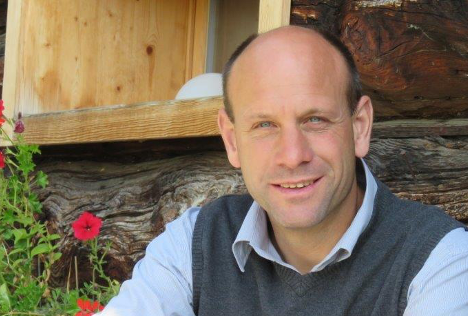
Daniel Albertin has been president of the merged municipality of Albula/Alvra since 2015. The self-employed farmer is 49 years old. He grew up in Mon and still lives there with his family today.
Christian Gartmann is the communication and media officer of the municipality of Albula/Alvra at Brienz Rutsch. The municipality of Albula/Alvra informs those affected and the public monthly in a bulletin about the current development, its activities and background to the Brienz slide. This interview was published in the infobulletin dated September 11, 2020 for the month of August.