The Swiss Helicopter Association (SHA) was founded 25 years ago. The Small Industry Association is striving to improve the framework conditions for helicopter aviation in Switzerland and Liechtenstein and to gain acceptance among the population. Cockpit spoke with SHA President National Councillor Martin Candinas.
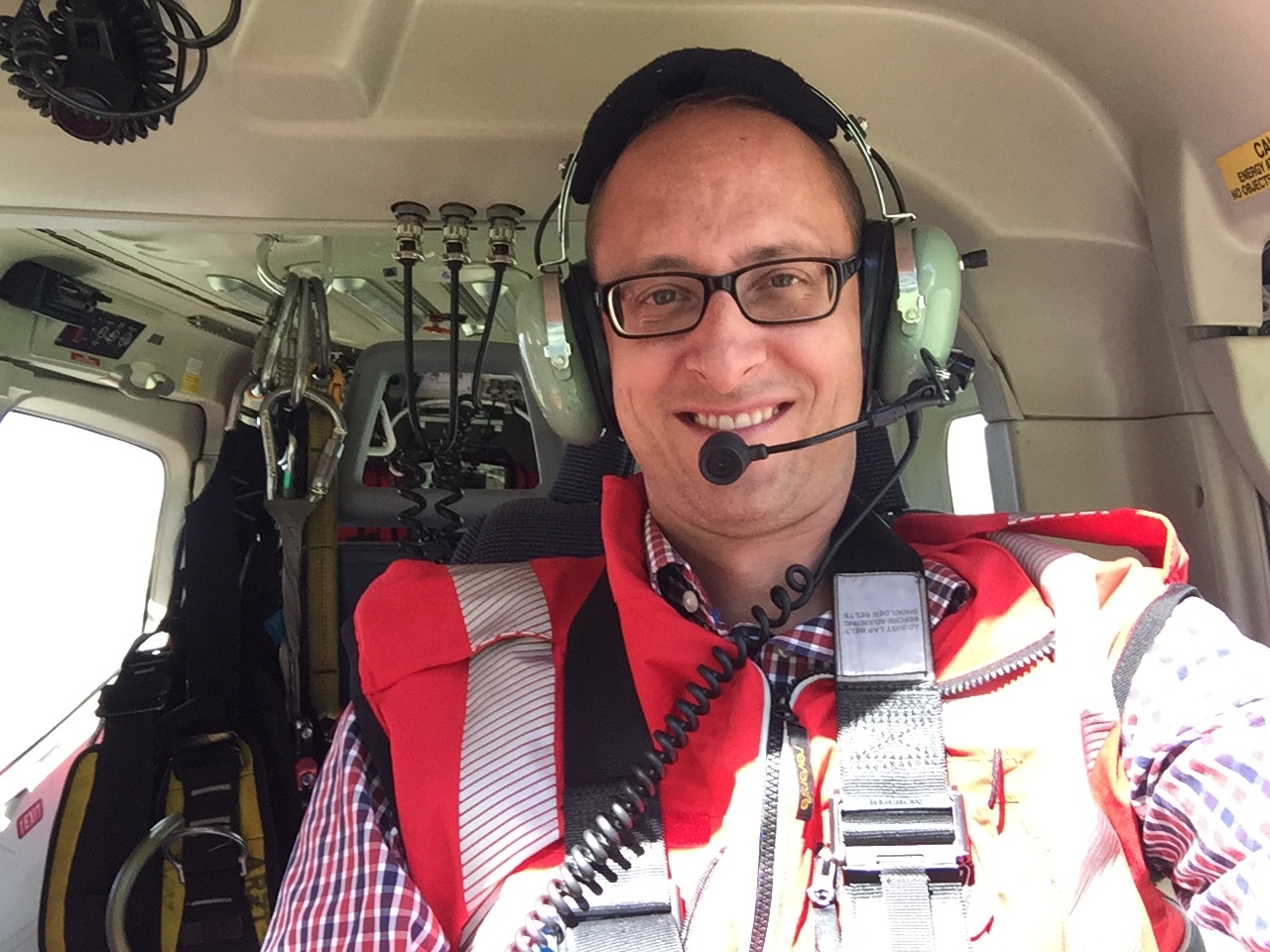
How often do you fly helicopters?
I don't fly at all myself, I'm just a passenger, and that only rarely. I may fly six flights in my entire life. But the way helicopters fly and the variety of their missions inspire me.
Was this enthusiasm the reason you became President of SHA?
Technically speaking, I'm fascinated to see how these multi-tone devices take off on rotating wings and can move seemingly effortlessly in all directions. However, the fact that I have taken over the chairmanship of SHA is primarily due to the importance of this small sector for the entire country. Whether in rescue services, on supply flights in the mountains, on inaccessible construction sites, in the timber industry or for tourism purposes: helicopter companies in Switzerland are doing great things.
As a National Council, you are very well connected. Is political lobbying your main task?
An industry association undoubtedly benefits when its concerns are actively represented in politics. However, cooperation in partnership with authorities in Switzerland and other European countries is at least as important. And my duties as president include ongoing contact with the industry itself. Our members and potential new members must know that the association is always open to their concerns.
Is anyone in the Federal Palace even interested in the concerns of the small helicopter industry?
We're a very small association. When it comes to attention, we sometimes compete with large trade associations. However, Swiss helicopter companies are doing excellent work in various areas. The people and cantonal representatives are aware of this and they listen to me, SHA managing director Philip Kristensen and the representatives of our members time and again.
So why is there no more talk about helicopters in the Federal Palace?
Political work is long-term work and much of it takes place behind the scenes. It is not always the large media presence that is decisive, but the result in the votes and ultimately in the laws and regulations. This was seen in the example of age limits for professional pilots: Parliament decided that Switzerland needed a different regulation than EASA required.
You are referring to EASA. Is it a blessing or a curse for helicopter companies in Switzerland?
Probably a bit of both. The fact that Switzerland is part of EASA is a fact and it undoubtedly has its advantages if our small country does not have to invent every provision itself and carry out each type approval in accordance with its own rules of the game. On the other hand, airlines in our country have special needs and opportunities to operate their aircraft safely and economically. The aim here is to adapt European regulations to Swiss realities in such a way that our companies can also live with them.
Installing ski lifts at 2500 meters is simply not the same as using offshore oil platforms in the North Sea.
Is Little Switzerland Getting the Attention It Needs in Cologne and Brussels?
That varies from topic to topic. Of course, the larger a network of countries, the less a single country has to say. However, Switzerland has a very good reputation in helicopter aviation and, together with our members, we try to contribute our knowledge and experience to EASA countries. Sometimes we get through and sometimes we just have to go through Parliament.
Are you supported by FOCA or is your lobbying there viewed critically?
I think our federal office knows that we are not opposing regulations as an end in itself. Whenever we oppose regulations, we have good reasons for doing so. However, it is in the nature of things that companies and their regulators do not always have the same priorities. Then you rub yourself against each other and look for a solution that both of you can live with.
Is regulation particularly bad in aviation?
Flying has to do with technology and, above all, with safety; there are certain rules in everyone's interest. But the amount of administrative work our companies have to incur in order to be able to prove documentation, approvals, internal regulations, audits and a thousand other things is simply unreasonable. Deregulation is urgently needed here, both at EASA level and at FOCA level.
Mountain landing sites are a purely Swiss theme. As a Grisons, you are fighting against alpine protection. Are Two Hearts Beating in Your Chest?
Quite the opposite. Every mountaineer knows that he must not consume or destroy his alpine landscape. But he also knows that surviving in the mountains requires you to be economically active in the Alps. The Abolition of Mountain Airfields is an attempt to further complicate the economic existence of the Alps.
Aren't you exaggerating a bit now?
If it were exclusively about mountain airfields, you could assume that. But these places are just one of many examples of how the Mittelland is trying to adjust its idyllic image of the Alps. Of course, the Alps should not become a Disneyland, but without jobs, more and more people are emigrating. It's a vicious cycle.
And what do mountain airfields have to do with it?
They are important points of our aviation infrastructure, particularly for pilot training. Here, pilots can practice what they need to be able to do when working on rough terrain, such as transport and rescue flights, in a familiar environment.
Isn't that an excuse to be able to fly as many tourists as possible up to the mountains?
Tourist flights to high-altitude places offer pilots the opportunity to get practice in a mountain environment. Quite a few of these pilots later switch to more sophisticated transport and rescue aviation. If all the mountain landings had to be carried out as pure training flights without ticket income, the entire heli-flying would be made more expensive. Entrepreneurs, farmers and communities in mountain areas would have to pay the bill.
What else is the level of acceptance of heli-flying in Switzerland?
I think the Swiss know what they have in their helicopter companies. No country has a comparable air rescue system, if a holiday resort somewhere is cut off from the outside world, a private airlift is set up in no time, avalanche slopes are blown out of a helicopter and numerous construction sites from the big city to the high Alps cannot do without them.
However, it is a fact that there are people who would rather never see or hear a helicopter at all.
It is up to the association and all its members to promote understanding of the benefits of the helicopter industry for Switzerland. This is the only way to explain to people that the industry also has certain needs without which it cannot work.
Christian Gartmann is Communications and Media Officer for the Swiss Helicopter Association (SHA). This interview was published in the June issue of the Swiss aviation magazine Cockpit.