The Alpine region can play an important role in the healthcare system of the future. Rehabilitation after illnesses and accidents should take place where patients feel comfortable. Decentralized rehabilitation could provide significant cost benefits, says Prof. Dr. med. Gregor Zünd, Director of the University Hospital Zurich, in an interview with “Health & Tourism.”
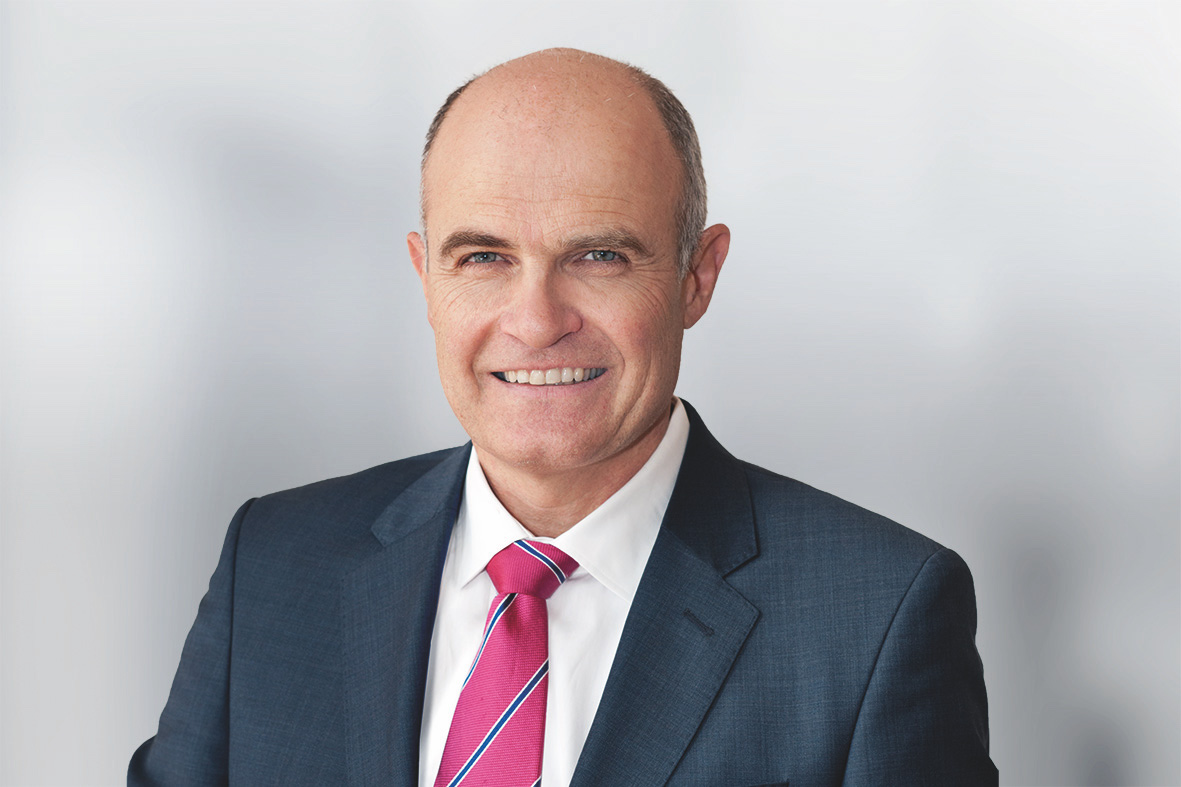
Against the backdrop of skyrocketing healthcare costs, politicians, insurance companies and hospitals are looking for ways to make patient treatment more economical. Prof. Gregor Zünd is convinced that there is a lot of potential in aftercare and rehabilitation. The director of the University Hospital Zurich (USZ) will be a speaker at the 3rd “Health & Tourism” conference.
Health & Tourism (G&T): You run one of Switzerland's largest hospitals. What challenges do central hospitals face when planning their future offerings and infrastructure?
Prof. Zünd: Infrastructure and staff in central hospitals are significant cost factors in our healthcare system. We must be able to treat more patients with the same or even better quality in a hospital with the same number of beds and cost structure. By international standards, hospital stays in Switzerland are significantly longer.
G&T: Can you simply send patients home earlier?
Prof. Zünd: No But thanks to modern treatment methods, such as minimally invasive operations, hospital stays are already shorter today than just a few years ago, or originally inpatient stays can now also be carried out on an outpatient basis. These developments will increasingly manifest themselves in the future. Aftercare and rehabilitation belong to well-trained personnel. They can be performed on an inpatient basis, i.e. in a medical facility, or on an outpatient basis, for example in a patient or health hotel.
G&T: To do this, huge sums of money would have to be invested in infrastructure. Who will pay for these investments?
Prof. Zünd: These can be private or public investments. The costs of rehabilitation outside an acute care hospital are significantly lower. Insurance companies are therefore interested in such solutions.
G&T: A lot of medicine is being centralized. Rehabilitation too?
Prof. Zünd: Aftercare can take place centrally or decentrally. For this purpose, more rehabilitation capacities are being created in larger agglomerations. But there should also be decentralized places where high-quality medical care can be provided and patients feel comfortable. An attractive environment also has a positive effect on rehabilitation.
G&T: That sounds like a luxury solution. The costs should, of course, fall.
Prof. Zünd: Rehabilitation in the mountains is no more expensive per se than in a city. I am convinced that when high-quality rehabilitation services are available in the mountains, they will be used.
G&T: But probably only from self-payers; generally insured people can't afford to go to rehab in a hotel.
Prof. Zünd: If outpatient rehab can be offered at attractive rates, health insurance companies will support this.
G&T: What role do cantonal borders play here? The cantons of the Swiss Plateau will not be happy to co-finance treatments in the Alpine region...
Prof. Zünd: Of course, there is a competitive discussion. But competition is welcome and encouraged in healthcare. The quality of treatment is crucial.
G&T: What requirements must rehabilitation sites in the Alps meet if they are to be more closely integrated into the healing chain of patients in central hospitals?
Prof. Zünd: There can be no isolated rehabilitation without hospitals. After all, rehab is not simply a vacation. In addition to hotels, there is therefore a need for competent hospitals with well-trained doctors, therapists and nursing staff.
G&T: In which medical areas do you see potential for rehabilitation in the Alpine region?
Prof. Zünd: I see potential areas of focus on diseases of the cardiovascular organs, neurodegenerative diseases, treatments or procedures to combat tumours, and musculoskeletal problems. A certain degree of specialization is desirable. Each region should carefully consider which offers and expertise it would like to build up.
G&T: Will hospitals in the Alps simply become rehabilitation clinics? What does this mean for the population in these regions and their supply?
Prof. Zünd: Rehabilitation requires certain special medical services. However, these will not affect acute care for locals or holiday guests. On the contrary, medical centers will be better utilized. This is more of an addition than a competition.
G&T: The USZ supports the Santasana St. Moritz project for heart rehabilitation in high-altitude climates. Why?
Prof. Zünd: From the USZ's point of view, it is essential to know that its patients are in the best hands for aftercare and rehabilitation. There are competent medical centers in the Upper Engadin region, and that is important to us.
Interview: Christian Gartmann, Health & Tourism
Professor Dr. med. Gregor Zünd
Gregor Zünd studied medicine in Bern and then continued his training as a cardiac and vascular surgeon. He worked and researched in Switzerland, Houston and Boston (USA). From 2001 he led surgical and later all clinical research at the University Hospital Zurich (USZ), and in 2008 he was appointed Director of Research and Teaching at the USZ. Prof. Zünd has been Director of the University Hospital Zurich since 2016.
The USZ is one of the largest hospitals in Switzerland. In the 44 clinics and institutes, 41,056 inpatients were treated and 572,622 outpatient visits were counted in 2016. The USZ employs around 8,000 people.
Health & tourism
The “Health & Tourism” conference is a private initiative for the Alpine region. It is aimed at service providers from tourism, healthcare and industry as well as decision makers from politics and associations and aims to highlight opportunities and market opportunities for health tourism development in the Alpine region.
Register at a preferential rate until August 31!
Prof. Gregor Zünd will be a speaker at the 3rd “Health & Tourism” conference in Pontresina on September 21. The preferential rate of CHF 200.- (students with a permit: 100.-) is still valid until August 31.
From September 1:300.-/150.-
Information and registration at www.udir.ch
Organizer/ Media contact
Christian Gartmann AG, St. Moritz
Christian Gartmann
+41 79 355 78 78
christian@gartmann.biz