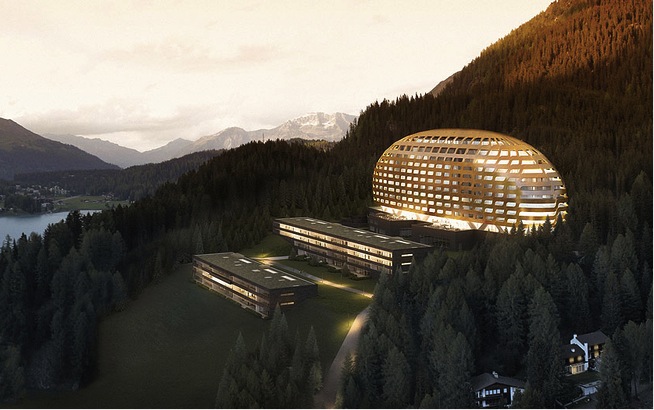
The bankruptcy case involving the “Intercontinental” hotel in Davos made waves in the Swiss press. The financial belly landing of the prestigious Davos property surprised many — after just half a year of operation. The hotel industry is not a precise science and so it's easy to speculate about the causes. However, one can already draw a lesson from this case: Back to the virtues.
By Reto Branschi*
It is a truism that a new hotel needs a few years before it really pays off. In addition to the special costs for training, opening campaigns and additional marketing, the fact that a new company must first make a name for itself weighs heavily. This is the only way he can benefit from recommendations and build up a regular customer base of recurring guests.
The Davos Intercontinental has not had this time so far. The tenant deposited the balance sheet and was replaced by a new company just one day later.
Commentary blamed the failure primarily on the owner, a Credit Suisse fund, and his supposedly too high return expectations. The SonntagsZeitung also aimed at investors, but, as always, went one step further: Davos had “fallen into the WEF trap.” According to the SonntagsZeitung, an investment boost of 500 million francs in the hotel industry and the conference venue of Davos forced by the WEF is “a flop.” Only the Tages-Anzeiger pulled out and headlined “Success makes you slow”: Davos had simply lost sight of its customers.
“Hospitality is not a precise science.”
Of course, after every bankruptcy, you have to ask yourself how this came about. Owners, tenants, management companies and tourism organizations would do well to critically examine what went wrong and why and how such cases can be prevented in the future. The answer is as simple as it is far-reaching: Swiss tourism and the Swiss hotel industry must return to their virtues at all levels, from marketing organization to investors to waiters.
Following the second home initiative, hotel investors can no longer count on selling apartments when it comes to making their investments profitable. Calculations from before the initiative are now calculations. Without residential sales, hotels will have to deliver enough profitability in future to pay interest on investments. And: Owners or investors must get used to the idea that, in addition to profitability in the form of interest, simply maintaining the value of their property through well-running operations represents a bonus that should not be underestimated.
But even moderate return expectations on the part of an owner, a hotel business can only meet if it achieves attractive utilization rates at good prices. And only companies that score positively in guest reviews can do that. No company can afford to live on expensive marketing campaigns only on new customers. Existing guests who return themselves, i.e. become regular guests, and who also recommend the hotel to others are decisive for the success of any hotel.
“The ancient virtues of hospitality”
A look at hotel occupancy and reviews on the Internet speaks volumes: Companies with positive reviews are booming, everyone else is suffering. Only those who practice the “old virtues” of hospitality, the joy of service, flexibility and genuine, genuine service will still have a chance in the global cutthroat market around the best days of the year.
And what do we, the tourism organizations, do? We are continuing to do everything we can to attract new groups of guests to Switzerland and thus ensure that they become guests of our villages. Whether they become regular guests and then contribute to the profitability of hotels, restaurants and retail businesses is decided during their stay: on the virtues of each individual tourist service provider.
*Reto Branschi (55) is CEO of the destination Davos Klosters.
This article was published in the Bündner Tagblatt on June 17, 2014.