The Graubünden municipality of Albula/Alvra has had an eventful year in 2023. In May, she had to evacuate the entire village of Brienz/Brinzauls because a rock slide threatened to destroy it. The residents can now live in their village again, but the landslide will keep the community busy for decades to come, says community president Daniel Albertin in an interview.
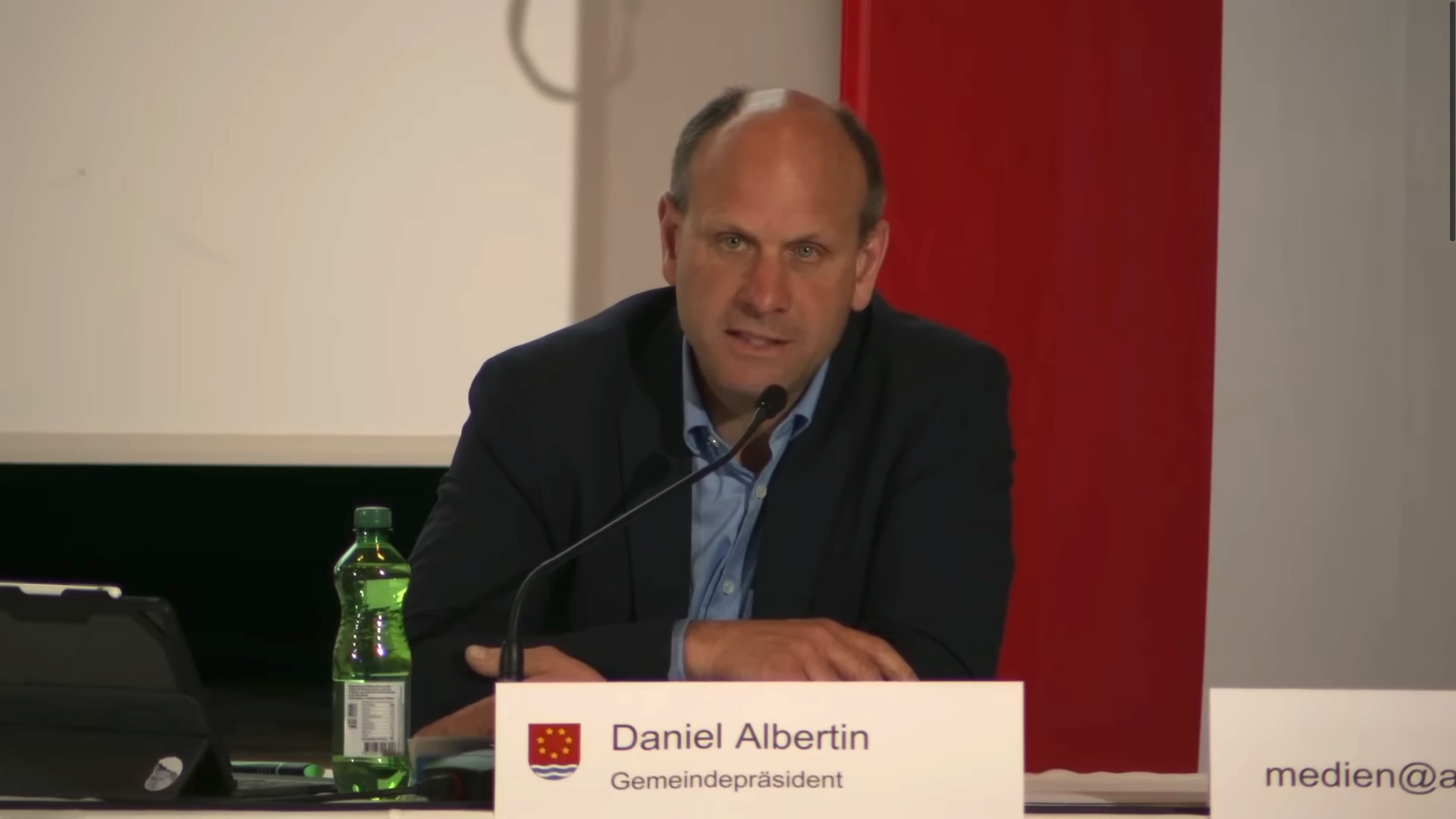
Mr. Albertin, the year 2023 is drawing to a close. A year that you would rather not have experienced? It was a very demanding and very difficult year for many of us. On the other hand, it was a very instructive and special year, in which we also experienced moments that were very valuable. And I don't want to do without them in retrospect.
For example? The solidarity that Brienz/Brinzauls has been experiencing within the community for years was great in early summer. Everyone was very moved by the evacuation and everyone did their best to help. Even outside the community, it was felt that Brienz's fate left no one unaffected.
Did that surprise you? I wasn't surprised, but I was very happy. When other Graubünden municipalities, private individuals and companies spontaneously donate money for the evacuated population, when second residents make their apartments available in an uncomplicated manner and not only the Graubünden government but even a Federal Council calls and offers its help, you feel that cooperation in this country is still working well.
Is there a moment that has particularly stuck with you? There are many of them. 2023 was perhaps the year of new encounters for me. The evacuated population of Brienz/Brinzauls, the hundreds of emergency services from all over the canton, our specialists, close cooperation in the community and with the community management staff. It all brought us together. Sometimes it is very small things that you memorize and then remember for a long time.
“We don't know exactly what will happen.”
You've forgotten the media hype! Maybe I've pushed him away (smiles broadly). Seriously, the media presence was already enormous. But as quickly as she came, she left again as quickly. Overall, the media people have done a very good job. They helped us to explain the processes. It wasn't always pleasant that there was some hustle and bustle, but we were well prepared by our media manager. When we could, and when we needed it, he involved the experts from the community leadership staff and me in media relations, otherwise he took on a great deal of media work for all of us and also protected those affected from too much media pressure. Now peace has returned, and that's a good thing.
They spent four years preparing themselves and the community leaders for the evacuation. What were you unable to prepare? There are a thousand things there. When you prepare a crisis organization, you start from scenarios that describe possible developments. Of course, you don't know in advance what exactly is going to happen.
So are these sandbox games? That is what they are sometimes called. But they are more than that: The thinking and hard work that you put into the preparations is well invested. If an event then occurs, you don't start from scratch. You can take over parts of the preparations unchanged, you have to adapt parts, and you do other things in a completely new way.
How well prepared were you in the end? All in all, it's fair to say: We had and still have a very good community leadership team. Some of our people have already been to Bondo, others are from here and know every nook and cranny here. The mix of people and their experience was a very good fit. And due to the preparation period, almost everyone knew each other already. This has also made collaboration easier and more efficient.
What distinguishes working during a crisis from working in a normal situation? In times of crisis, time is always of the essence. You have to decide before you know everything. On the other hand, everyone is also looking for solutions and everyone is trying to help. In the normal situation, there are many more concerns and reservations.
On the night of the debris stream on June 15, it was pitch black and no one knew exactly what was happening. How did you experience that? No one had ever heard the noise coming from the mountain before. He impressed us. The fact that we didn't see anything made the situation worse, but we knew that no one was in the village and therefore no one would get hurt. When we saw at dawn that probably nothing had happened to the village, we all breathed a sigh of relief.
The village had been evacuated for a good five weeks before the event. The impatience of those affected grew with each passing day. How much longer would you have kept it up? As long as the dangerous situation would have required.
That sounds a bit easy now. Nothing about this evacuation was easy for anyone. We always understood well that those affected became impatient. But this impatience wasn't worst for us, who had to answer their questions every day, but for themselves. Not knowing what is going to happen and how life will continue is hard to bear. However, we would not have been able to let the evacuees back into the village if it had threatened their safety.
But they have made exceptions... If the risk situation allows it, yes. The residents understandably wanted to go to their homes from time to time. As soon as we were responsible for that, we made it possible. And the farmers had to watch how the grass in their fields grew ever higher and could not hay for a long time. When it was safe to work below the village, we made that possible too. Nevertheless, it was an arduous time for everyone affected.
“Everyone was assaulted from time to time.”
Half the village has your cell phone number. Have you ever wanted a secret number? My people offered me that. But as a community president, you can't just shut yourself off. I tried to be easily accessible to people.
Have you never been at the ready? Everyone was at the ready from time to time. When you work almost day and night for long periods of time, this happens and you have to be careful not to suddenly run into a hamster wheel.
What did you do then? I left my cell phone in the office a few times. This allowed those affected to reach the community, but I myself was able to find peace for a few hours.
And where did you find this peace? It was hay season. I worked. That was good for me.
Has peace and normality now returned to the community? By and large, yes. For us, however, normality still means that Brienz/Brinzauls is moving downhill at more than one meter per year. The Brienz slide is still very bothering us. We receive tremendous support from the canton and numerous experts. But Albula/Alvra doesn't just have Brienz Slip.
How do you perceive the residents of the entire community today? I get to be the president of a community that sticks together. It is not self-evident that the municipal assembly approves projects and loans for Brienz/Brinzauls year after year. The solidarity within the community is enormous. The whole community can be proud of that.
“The municipality must not take over financially.”
Are there also things that make you stomachache? We must ensure that the municipality does not pay for itself financially. The landslide, the construction of the drainage tunnel and later its operation will keep Albula/Alvra busy for generations to come. In addition, there must always be enough money and people available so that the many other needs of the community can be met. All our villages have the right to have the community there for them too.
What are you looking forward to in 2024? I'm looking forward to a summer without unusual events. With more time for our farm and especially for my family.
Daniel Albertin has been president of the merged municipality of Albula/Alvra since 2015. The self-employed farmer is 52 years old. He grew up in Mon and still lives there with his family today. Christian Gartmann has been Communications and Media Officer for the Municipality of Albula/Alvra for the Brienz slide since 2019. He is responsible for the risk dialogue and conducted crisis communication relating to the evacuation of Brienz/Brinzauls in the summer of 2023. The interview appeared on December 15, 2023 in the “Brienz Rutsch Bulletin”, which the municipality of Albula/Alvra publishes monthly.