“The importance of St. Moritz as a Graubünden economic engine is central,” comments a recent study by the Grisons Economic Forum. The paper shows that St. Moritz and other tourist destinations in Graubünden are the financial model boys when you compare their cantonal funding with their financial contributions to the canton. They — or rather their taxpayers — make a significant contribution to balanced Graubünden cantonal finances.
Here and there, the “contrast between rich and poor” was immediately heard when it came to the results of the study. However, this comparison is not relevant at all. The study shows that, from a cantonal perspective, it is not the difference between “poor” and “rich” municipalities that counts. The tax performance of a region is much more decisive. And this comes from the day-to-day business of tax-paying companies and residents. It must be promoted. “The canton would do well to ensure the favourable development of St. Moritz as a destination with an appropriate economic policy,” the authors of the study conclude.
The recommendation relating to St. Moritz can also be applied to the rest of the canton: Instead of punishing tourist regions for their economic performance, the canton should support them and their companies in securing and further increasing their economic performance. Time is running out: While we can still applaud the high cantonal tax revenues from St. Moritz today, things will look completely different in five years. Following a recent flare-up of the construction boom, tourist areas are facing major economic upheaval due to the second home initiative.
Your tax capacity will suffer as a result, and so will your cantonal finances. And no one can be happy about that: tourist areas such as Davos, Flims/Laax or St. Moritz are our economic engines. Without them and their tax base, the canton can no longer provide its basic services to the entire population.
“Someone just has to tell the Churers.”
Anyone who reviews cantonal referendums and parliamentary debates of recent years sees that this basic understanding is missing. There was talk of “envy and resentment” when the north and northwest of the canton did not want to allow the south and southeast to run for the Olympics. It was successfully argued at the time that “so much money for the rich places” was the wrong approach. Somehow understandable: Graubünden politicians, just like the federal government, have failed to convince the population of the importance of economic cohesion in our country.
That the government or Chur, for example, benefit when the Upper Engadine is doing well is actually a truism, but someone simply has to tell the rulers and the Churers. However, it is also important to explain in tourist areas, for example, the importance and costs of the capital city functions that Chur provides for them.
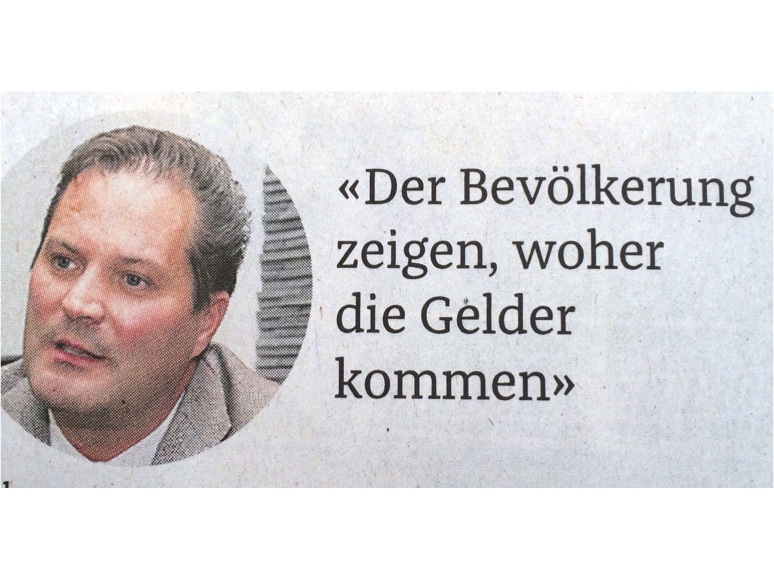
Now that the Graubünden cantonal parliament has been newly elected, it would be a good time to at least make politicians aware of the needs of the various areas of the canton. Instead of dividing the canton between “poor” and “rich” municipalities, we should start by showing who is doing what from this canton and, this is also an absolute part of making it transparent where the money for this comes from.
The present study by the Grisons Economic Forum is a good start to this. Now you can think about what meaningful economic promotion should look like in the future. Anyone who reads the study carefully will recognize the thrust: We would do well to promote our strengths instead of complaining about our weaknesses.
Alessandro Della Vedova
is Vice President of CVP Grisons, Grand Council of the Poschiavo District and Podestà of the Municipality of Poschiavo. The study mentioned above can be downloaded here.
This post was published in Bündner Tagblatt dated June 2, 2014.