One year after London 2012, it is clear what effects the Games are having on Great Britain. In a representative on behalf of the BBC, the British are overall positive about the effects that have occurred. 74 percent of respondents would like Great Britain to hold the games again. 69 percent are convinced that public money has been well spent on the games.
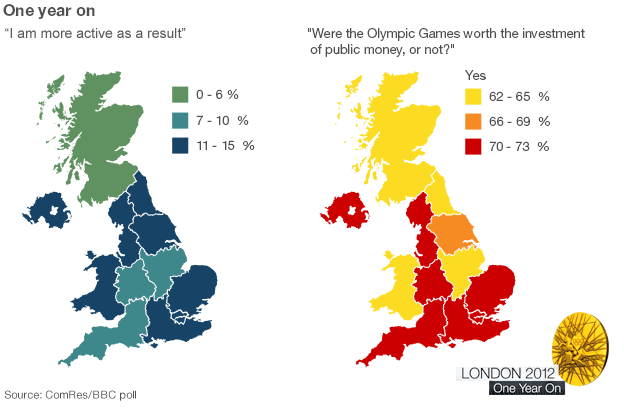
With regard to the effects on daily life, the results are naturally less high, but still positive: A good fifth of the respondents say that public services have improved since the games, and around a third believe that the games have had a positive effect on sports facilities in their area. This effect is stronger in the south of the country than in the north, but even in faraway Scotland, 27 percent of respondents say that the games have improved their sports infrastructure.
For the games to actually have a long-term effect, Great Britain must continue to invest in sport: Tim Lamb, CEO of the sports governing body Sports and Recreation Alliance, told the BBC that it was important to keep up the momentum now. Sports facilities must be available at reasonable prices and with good equipment.
The biggest problem with the long-term effects is the question of whether the games made the British “sportier” and therefore healthier. Here, only 11 percent say that they have become more active in sports as a result of the games. However, this effect is much better among young people: A quarter of 18 to 24-year-olds are more active today than before the games.
The costs of the Games, which have been repeatedly criticized, are no longer so critically assessed: 69 percent of those surveyed think that the Olympic Games and the Paralympics were worth the money invested.
The long-term effects of the 2012 Games can only be estimated in a few years. Sports Minister Hugh Robertson gives with the BBC It should also be borne in mind that although they have made a very good start, there is still a lot to do.
remark
“Only 11 percent” of Britons say they have increased their sporting activity after the Olympic Games. Just 11 percent? That is almost one eighth of the respondents aged 18 and up to old age and across all parts of the country. Which of the many other campaigns for more exercise, against fast food or nicotine consumption has had even approximately the same effects on the health of an entire population in recent decades?
Getting one eighth of the population to change their behavior is a remarkable achievement. In the long term, however, it is particularly important that 24 percent of young adults between 18 and 24 years of age, i.e. a quarter of the respondents, already report major sports activity. There is no doubt that the Summer Olympics are much more expensive than a few advertising campaigns.
But if only a portion of the 24 percent of young adults stick to exercise and therefore live healthier lives, the costs are definitely well invested: Great Britain budgeted healthcare costs of almost 130 billion pounds in 2014. If healthcare costs fall by just one percent, the games' total budget of 9.3 billion pounds will be recovered in just seven years due to the saved healthcare costs alone.
Of course, these are just numbers games and the hoped-for savings must first be proven. However, the health effects are just one of many effects that the Olympic Games have. The majority of Great Britain is now certain that the 2012 games were a good thing for the country. You can and must look forward to the longer-term review five or ten years after the games. However, the results available today are a very good indicator.
- For the study, the institute interviewed ComRes On behalf of the BBC, 3,218 people aged 18 and over across the UK.
- Source: Article on BBC Online
- The full study from the BBC