The first conference on crisis management in St. Moritz brought together more than 60 experts from Switzerland, Liechtenstein and Austria. Using a real event as an example, they discussed how crisis management can work even during a major power outage.
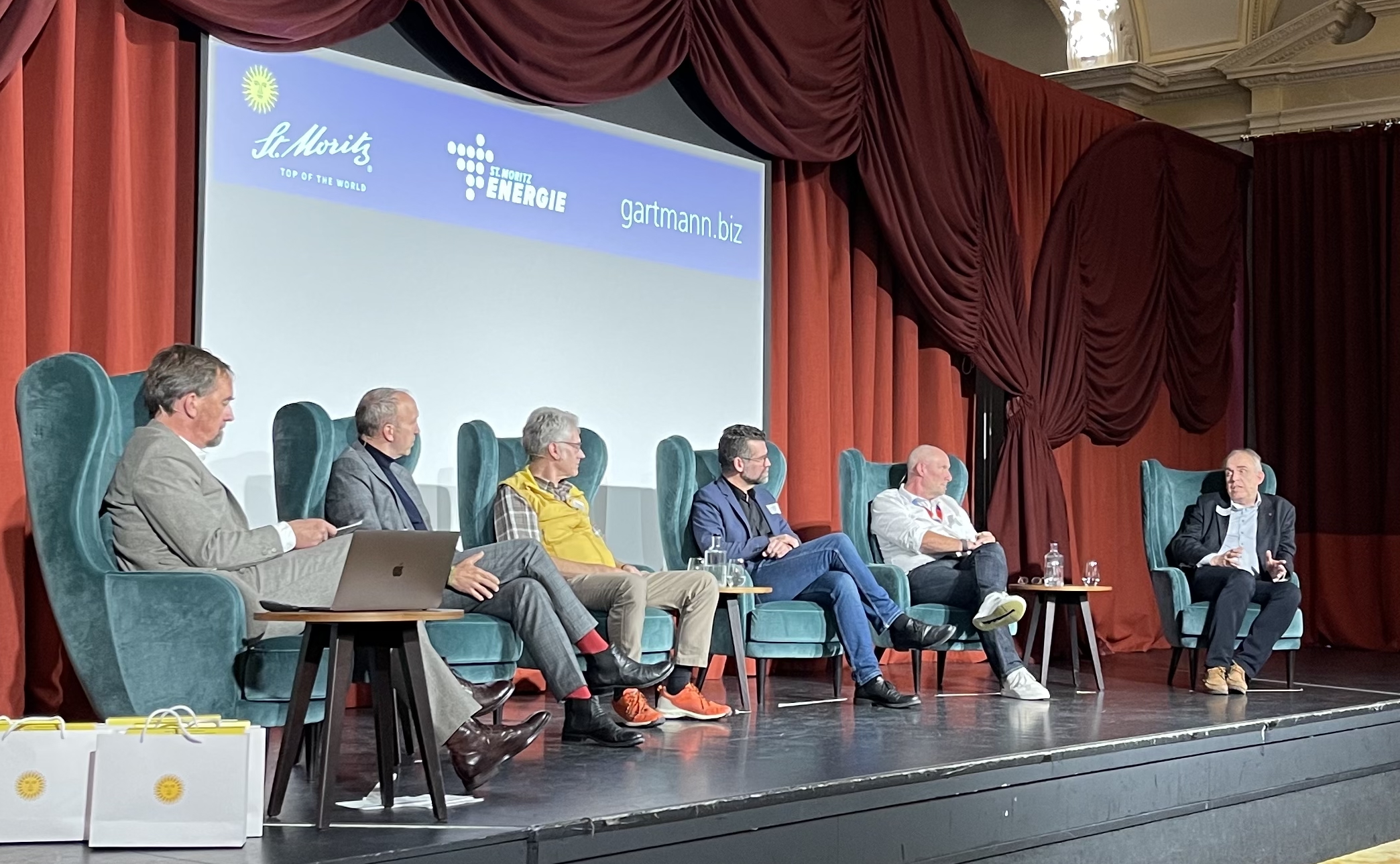
Zermatt was not only snowed in and cut off from the outside world on Easter weekend 2025, but the power supply was also interrupted for two days. As a result, mobile communication failed and the government radio network “Polycom” also only worked to a limited extent. The community leadership staff was responsible for the safety of the population and thousands of guests. Chief of Staff Dietmar Schmid impressively described his experiences and the actions of those responsible at the first conference on crisis management in St. Moritz.
“97% of power outages affecting our mobile communications systems last less than four hours,” said crisis manager Reto Näf from Swisscom. That is why Swisscom is currently expanding the battery capacity of its transmission sites from one to four hours. “However, there can be no absolute resilience against power outages or technical problems.” Näf emphasized that protecting the telecommunications network against power outages could only work in cooperation between municipalities and Swisscom. “We also need their help if we are to help them efficiently.”
View of Tyrol
The telecom network in neighboring Tyrol has also been hardened against a power failure, said Elmar Rizzoli, head of the Tyrolean Center for Crisis and Disaster Management. If the network fails, management in an emergency situation could become difficult. “You can usually deal with a single fault. If several disorders come together, there are cascade effects that are sometimes difficult to control.” Digital support is central to event and crisis management, stressed Crisis Staff Chief Michael Marty from electricity supplier Axpo.
The systems must be redundant so that if one system fails, another could be used. Nevertheless, he always also stores central data on a laptop that works with batteries. “And there is always a notepad next to my bed, on which I can record information even without electricity in an emergency.” The first conference on crisis management last Wednesday was organized by St. Moritz crisis manager Christian Gartmann and municipal council president Isabel Wenger and supported by the municipality of St. Moritz and St. Moritz Energie.
Experts from the public sector and companies were invited to exchange views on aspects of event and crisis management. The conference was held as a hybrid event. In addition to the participants in the hall, numerous experts saw a live stream on the Internet. They came from Grisons, other cantons, the Principality of Liechtenstein and Austria.
Valuable exchange
The topic of “Leading when the networks are on strike” was deliberately chosen close to the practical work of crisis teams: The risk of power outages and a power shortage remains real, stressed Axpo crisis manager Marty. For the next 25 years, Switzerland lacked large amounts of electrical energy. In addition to the conference theme, there was also a lively personal exchange between the participants in St. Moritz. “This exchange is particularly valuable,” said Pascal Porchet, Head of the Grisons Office for Military and Civil Protection.
“Practical knowledge and direct contact with experts from a wide range of fields help us to find better and faster solutions to problems in the event of an accident or crisis.”