In an unusually severe reprimand, the German Council for Public Relations (DRPR) castigates an action from 2010 carried out by the agency Jung von Matt (JvM) for the customer Mercedes Benz and awarded a golden lion in Cannes. The DRPR in sharp terms complains of lack of transparency and even demands that the golden lion must be withdrawn from JvM.
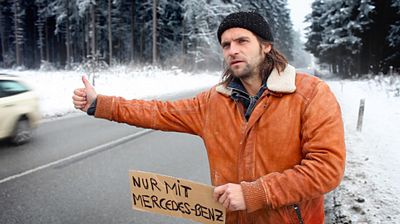
Matt's agency Jung came up with a special trojan for their client Mercedes: A paid blogger pretended to hitchhiker down south as a hitchhiker in a kind of performance project and eagerly reported about it on various social media channels. The special thing about it: The blogger only wanted to drive Mercedes.
The seemingly harmless image campaign was implemented effectively and won a golden lion at the 2011 World Advertising Championships in Cannes. The fact that it was not clear from the outset who was behind the campaign was of course part of the concept, but is now stirring people's minds in an unexpected way. The DRPR complains that the commitment of Mercedes and the JvM agency should have been made transparent and demands that the Cannes Lion must be withdrawn from JvM again.
The Trojan Horse
The fact that the PR industry is striving for transparency is certainly commendable, and transparency is paramount, especially on social media, which naturally used the campaign in question. However, certain types of teaser campaigns or PR campaigns can only work if the audience is misled, at least temporarily or partially. If an action is then successful, an investigation is carried out. At some point, it comes to light who is behind the action and the game of hide and seek is over. This part is also part of the campaign and is part of its success.
True to their agency logo, JvM built a Trojan horse for Mercedes. The customer and agency deliberately took on a reputation risk with the campaign. The risk that the whole thing would “backfire” and damage the Mercedes brand was and is there. Social media users are sometimes too sensitive when it comes to purchased opinions, blog posts, reviews or judgments.
So far, so good. According to the DRPR, at the request of a specialist journalist who wanted to shed light on the action, the blogger and JvM initially denied that JvM or Mercedes were behind the action. That is the unpleasant, even unprofessional part of the story. The protagonists have thus unnecessarily harmed themselves and the action.
However, modern consumers are responsible consumers. They are mature enough to form their own opinion about the behavior of companies and private individuals. In the end, they too make the only relevant verdict on the image campaign. They were approached with the action and fooled. You may or may not find it entertaining. This is precisely where the risk and perhaps also the appeal of the action lies.
PR from the DRPR on your own behalf?
The fact that the blogger's action was “bought” was made transparent voluntarily or involuntarily. The Mercedes brand may have suffered as a result, the name Stefan Gbureck very likely. When the DRPR now demands that JvM and Mercedes be stripped of the Cannes Lion, it not only overshoots the mark, it has also set itself the wrong example. After all, the campaign neither seduced minors nor harmed anyone else.
Whether the expert panel of the German PR industry did itself and its members a disservice or a disservice to itself and its members with the verdict remains an open question at least. The selection of the object could not have been more unfortunate. However, if the Council's aim was to raise its own profile with proceedings against a top agency, then that was certainly achieved. In addition, the whole thing was probably a storm in a teapot and bad PR for the PR industry.
Comment: Christian Gartmann