The earthquake disaster and the impending nuclear disaster in Japan are affecting people all over the world. In addition to traditional news media on the Internet, television, radio and print, social media with countless news platforms, blogs and text services offer secure and unsecured news from the disaster area, search services for missing persons, donation options and all sorts of abstruses around the clock.
When journalists these days seek reliable information about the number of victims of the earthquake, the state of various nuclear reactors or the level of contamination in their environment, they are tapping into social networks in addition to official government sources. Despite electricity shortages and network congestion, social media are a valuable means of communication and information during a crisis. They provide traditional media with first-hand information.
Trust the operating companies of Japanese nuclear power plants after several hushed up Damages, breakdowns and accidents In recent years, even the tech-savvy Japanese have stopped, and government information is being treated with great care. Especially in the first few days after the earthquake, the Japanese government was so cautious that even the Japanese people used to it wonder what was being withheld from them.
Government pushes black Peter to power plant operators
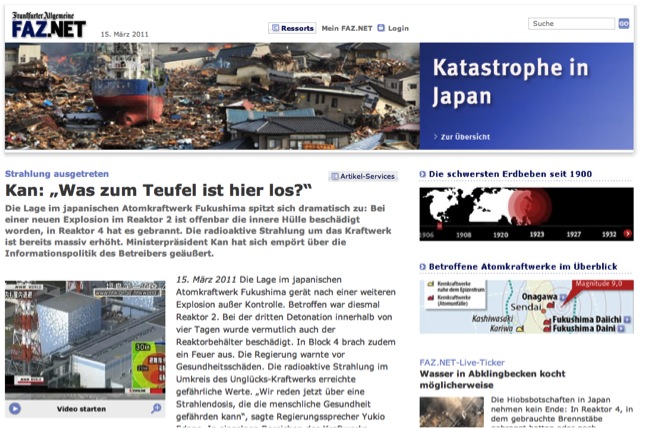
Even today, it is difficult to judge whether state information reliably reports on the current state of nuclear reactors in the disaster area. The pressure on the government is growing, because in Japan itself, the Call for transparent information louder and louder, and around the world, more and more media are taking up reports from those affected in the disaster zone and juxtaposing them with government information. The government is shifting responsibility to power plant operators. Prime Minister Kan Expresses indignant about their information policy.
- However, the number of sources on social media is barely manageable anymore. Report on Twitter alone under the hashtags #Earthquake, #Tsunami and #Japan countless authors on the situation in Japan.
- Die Google real-time search shows new tweets every second.
- The news platform www.undispatch.com The United Nations lists a number of apparently reliable tweeters on.
youtube In addition to a very large number of user videos, offers various media reports and a live ticker. Countless pages and groups have been created on Facebook; from pure sympathy for victims and survival tips in disaster areas to appeals for donations, you can find just about everything. Traditional media also offer users the opportunity to upload their content and thus actively generate content that they can publish in addition to their own research.
Donate millions from Facebook games
- Social media also provide great help in disaster areas themselves. The platform Ushahidi.com helps with their Crowdsourced technologyto coordinate rescue teams in real time, and saved many lives during the earthquake in Haiti, such as FAZ reported in February.
- As was the case with the earthquake in New Zealand a few weeks ago, Google is providing its Person Finder available, and various local cellphone providers offer similar services for those affected.
During the earthquake in Haiti in 2009, social media had already proven that they offer excellent opportunities for communication, especially in disaster scenarios. The first live reports from the devastated Caribbean state came via Twitter, social media platforms organized help, and the game manufacturer known from Facebook Zynga raised millions of dollars with games like Farmville.
And, as always with major events, absurd stories also come to the surface. So for example the conspiracy theorythat the earthquake in Japan was not a natural disaster at all, but was deliberately caused by the USA with a secret earthquake weapon.