Wild animals suffer particularly from human disturbances in winter. They are designed to move only minimally and therefore consume very little energy. If they are disturbed, a cycle is set in motion, which they often pay for with their lives. Nature, forest and hunting associations as well as cantonal authorities are therefore calling for particular attention to wildlife protection measures in winter.
Deer, deer, chamois and Capricorns change their organism in winter so that they consume very little energy. They spread throughout their winter habitats, move only minimally and lower their body temperature. Thanks to their fat reserves from the summer months, they can survive the winter with very little food. However, this “life on the back burner” only works if the animals can live as undisturbed as possible in their chosen winter habitats.
In Grisons, the habitat of wild animals is often also used for tourism and leisure. As a result, conflicts can arise between humans and wild animals. Where necessary, numerous wildlife protection zones have therefore been set up. There, hoofed game can spread undisturbed.
If walkers, winter hikers or winter sports enthusiasts ignore the wildlife protection zones, the animals are scared off. Your organism is immediately prepared to be able to flee again. The animals then consume much more energy, suffer more hunger and may die due to lack of food.
The wildlife protection zones in Grisons include a total ban on entry, and people and their dogs must remain on marked trails. In addition to permanent wildlife protection zones, Graubünden municipalities can also issue temporary protection zones in harsh winters, as Tarzisius Caviezel, Landammann of Davos, said at a media briefing.
“In a destination like Davos, however, such measures often also affect the tourist use of the landscape. It is then necessary to carefully weigh up the interests of all parties involved.”
Game doesn't belong in settlement areas
“Protecting wildlife is not easy to plan in advance. We must adapt flexibly to snow conditions and the natural supply of food and ensure that the animals remain in their natural habitats,” explained Andrea Häller, district head of the Grisons Cantonal Patent Hunters Association. The game is attracted by human food supplies.
“Open compost in the garden, unfenced silo bales from farmers, freely accessible green waste dumps or even trash bags on the street sometimes pull the game into villages and on roads and railroad tracks.”
“In exceptional winter situations, a local task force decides on further calming measures and possible steering measures. For example, we can cut down individual trees directly in winter habitats or, in special cases, also offer hay in a targeted manner,” said Riccardo Engler, district chief of the cantonal Wildhut in the Davos area.
“We do this to steer animals out of the danger zone into their habitats that are as undisturbed as possible so that they are not on roads, railways or in villages and endanger themselves or even people there.”
However, the cantonal agencies and the professional associations from nature, hunting and forest that have joined them at the “Grisons Green Table” are opposed in unison to a general reintroduction of feeding.
“When animals suffer from a harsh winter, it is tough in individual cases, but it is part of the natural cycles,” said Armando Lenz, managing director of Pro Natura Grisons. “The cantonal feeding ban is best in the interest of animals. It would not be useful and also not possible to feed all our game through a harsh winter. The best support is to leave the game alone in nature and to respect the wildlife protection zones.”
One of the reasons for the feeding ban is to prevent the transmission of diseases. At feeding sites, many animals come together in a very confined space. This closeness and the common food promote the transmission of infectious diseases, such as tuberculosis. But vegetation also suffers.
“Massive wild eating can also occur around feeding sites, affecting young trees in particular. This is serious in the protected forest,” explained AWN's Regional/Prättigau/Davos Regional Manager Matthias Zubler. “The best way to protect the forest against game damage is to have husked game stocks adapted to the habitat. Nevertheless, in exceptional winter situations, it makes sense to steer wild husk to cut down trees selectively if necessary, which the game can then eat.”
Additional steering measures in the Davos area
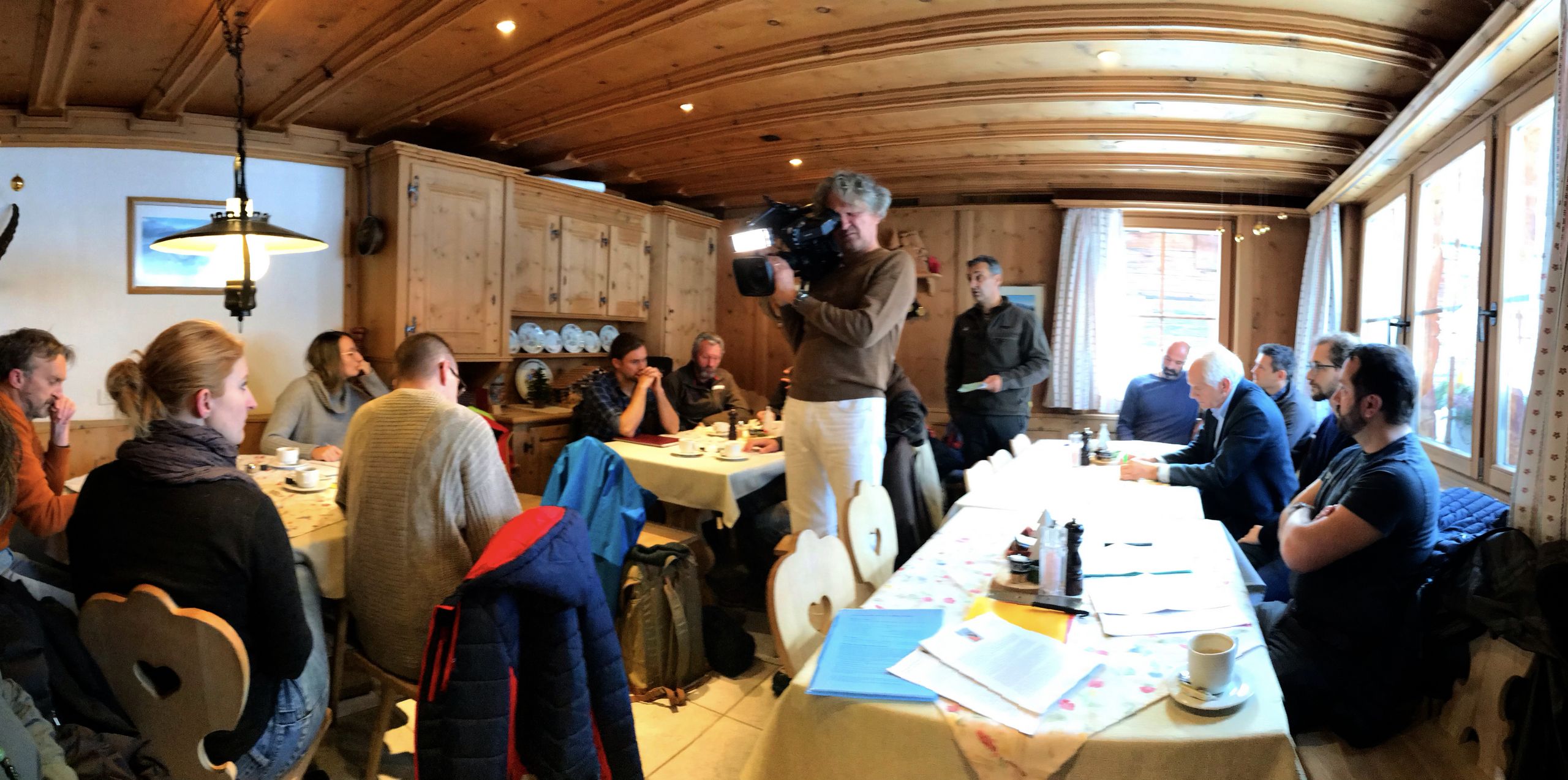
Following the past snowy winters, the Davos section of the BKPJV has openly criticized the cantonal feeding ban and its implementation, in particular the steering and calming measures. Responsible people from Wildhut, Forst, Hege and the municipality of Davos, who are familiar with local conditions, have taken up the criticism and analysed the situation with the critics.
Additional measures have been decided together, but the cantonal feeding ban still applies.
“Through even better information for the population and targeted measures, the aim is to prevent game from being lured into the dangerous areas of settlements and roads through human food sources,” AJF Director Adrian Arquint told the media. “Open compost, remains of food on manure piles or trash bags in the streets attract game out of its habitat and into the settlements during severe winters. This harms game in many ways and costs the lives of many animals.”
Game particularly needs rest in its winter habitat. The population, tourism and holidaymakers are being increasingly informed about this and made aware of the concerns of wildlife. The calming measures are also being discussed with the tourism industry and, if necessary, additional, temporary wildlife protection zones will be established.
In the area of governance measures, attempts are being made to speed up implementation. In order to be able to implement the measures more quickly in exceptional winter situations, decentralized feed warehouses are being prepared. Should the winter situation make it necessary, in addition to the calming measures, steering measures can also be approved and implemented quickly. For this purpose, experts specifically cut down individual trees or lay out prepared hay directly in winter habitats. In the area around Davos (overview), additional steering measures are being examined in addition to the previous ones.
“Feeding in habitats is a last resort,” explains Adrian Arquint. “We cannot and do not want to feed the animals through the winter. The only purpose of the food available is to keep them away from the dangers posed by humans and traffic.”
The planned additional measures do not mean a return to the feeding of earlier days, said Arquint: “Even in Davos, the feeding ban for wild husked animals that applies throughout the canton remains in force.”
The current situation will be constantly assessed in the coming winter by a local task force, consisting of the game rangers, the AWN foresters and the municipality, the heads of the hunting section and the community representative.
The Grisons Green Table
In 2017, six trade associations and five cantonal authorities joined forces to form the Grisons Green Table network in order to work together for wildlife-friendly solutions. The “Stop wild animal feeding” and “Game needs rest” campaigns explain and support the implementation of the cantonal feeding ban and are committed to the interests of wild animals.
Christian Gartmann supports the Grisons Green Table as a Communications and Media Officer.